Showing posts with label US. Show all posts

15 January 2026

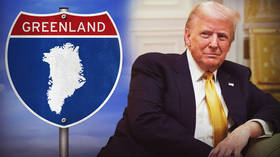
Why Washington will take Greenland *

Why Venezuela and Greenland are not so different

Why Washington will take Greenland

By Timofey Bordachev, Program Director of the Valdai Club - Published in RT

American political culture is drifting openly toward the annexation of Greenland. This may sound surreal to European ears, but it is not an exotic idea in Washington. It follows a logic that is deeply rooted in how the US historically became a great power and how it still proves its strength today.

The United States rose through territorial expansion at the expense of weaker neighbors. It seized land from those who could not defend it. There is no serious reason to assume that this instinct has disappeared. The only reliable guarantee of borders is the ability to fight for them. And history shows something very simple: the US does not attack those who can resist.

Modern world politics suggests that Western Europe is no longer among those who can resist.

That is why, from Washington’s point of view, the real question is not whether Greenland will eventually be absorbed into direct American control, but when. Western European states, and Denmark specifically, are among the least dangerous targets imaginable. They are harmless not only militarily, but psychologically: they are unlikely to respond in any serious way.

In American strategic culture, refusing to exploit such an insignificant position would contradict the fundamentals of foreign policy thinking. The conclusion becomes unavoidable: the annexation of Greenland, peacefully or by force, is inevitable.

Over the past few days we have seen an escalating series of statements and initiatives from American representatives. They range from internet “teasers” and political provocation to official remarks and even draft bills in Congress. The overall message is clear: Greenland should fall under direct US control. And just as importantly, the discussion itself is meant to create an impression in Europe, and in the wider world, that the outcome is pre-determined.

Western European politicians have responded with predictable panic.

Germany, for instance, has proposed a joint NATO mission called Arctic Sentry. The initiative is absurd, but revealing. It is Berlin’s attempt to respond to claims from the American president and others that Greenland is threatened by Russia and China, and that the island is supposedly defenseless. Direct consultations between senior German and American diplomats are reportedly scheduled in the coming days.

But it is difficult to imagine Washington taking Germany’s proposal seriously, because the issue is not about deterring mythical threats from Moscow or Beijing. It is about Washington’s own intentions.

The German idea draws inspiration from NATO’s Baltic Sea operation Baltic Guardian, which has been running for several years. But the Baltic Sea has little to do with American military or economic interests. Even the least intelligent member of the Finnish parliament should be able to understand this. That is precisely why NATO and Western Europe are free to play their games there.

Greenland is different.

Any attempt to frame Greenland as a NATO matter only exposes the alliance as a theater production, performing threats in order to justify foreign policy rituals. These Europeans are accustomed to imitating danger and imitating response. They appear to believe they can do it again.

It is unlikely to work.

Meanwhile, most of the world views this spectacle with indifference. Russia, China, India and many others see the Greenland drama primarily as another lesson in how relations inside the so-called “collective West” are structured. It is simply a more visible version of what has always been there.

There is nothing new in the fact that Americans are prepared to violate norms, including international law. The difference is that this time they are openly testing these norms against their own allies.

From Russia’s perspective, the situation does not pose a direct threat to our interests. The US can deploy weapons in Greenland even today. Its presence does not fundamentally change the military situation in the Arctic, nor does it threaten shipping along the Northern Sea Route. The US still lacks a serious fleet of military icebreakers, and it remains unclear when – or whether – it will acquire one.

China, too, is essentially indifferent to Greenland becoming American property. Greenland does not threaten China’s trade in the Arctic because the only real issue of interest to Beijing is the Northern Sea Route. And the US military presence on the island does not materially affect Chinese security interests.

On the contrary, in the context of Taiwan, Beijing watches with curiosity as the Americans undermine their own empire’s ideological foundations, including the principles of international law. Once the balance of power settles, it is always possible to return to old norms. Or indeed to codify new ones.

But for Western Europe, Washington’s aggressive noise around Greenland feels like the death sentence for what remained of the half-continent’s relevance.

For decades, its politicians considered themselves a “special” element of global affairs. Not fully sovereign perhaps, but privileged. They were happy to violate the sovereignty of other states across the world, insisting that this was humanitarianism, democracy, civilization. Yet they never seriously imagined the same logic could be applied to them.

The entire content of what Western Europeans loudly call “transatlantic solidarity” or a “community of values” lies precisely in this exceptional status. Their part of Europe’s role was to serve as a morally decorated extension of American power, a satellite that believes it is a partner.

Now it is the US itself that is delivering a potentially fatal blow to that illusion.

Even if the annexation of Greenland is postponed, watered down, or delayed by unforeseen complications, the fact that it is being discussed seriously is already catastrophic for Western European political legitimacy. It undermines what remains of their credibility in the eyes of their own citizens and the rest of the world.

Every state must justify its existence.

Russia’s legitimacy rests on the ability to repel external threats and pursue an independent foreign policy. China justifies itself through organization, stability and prosperity for its citizens. India’s legitimacy is grounded in holding together peace in a multi-ethnic, multi-religious civilization.

In every case, legitimacy is tied to the state’s ability to influence the most important aspects of people’s lives. Not to mention being able to rely on internal resources to do so.

But modern Western European states justify themselves differently. They justify their actions to their citizens through the idea of exceptional status, the right to look down on other countries and civilizations. If Americans can simply deprive the EU of territory, then they become equal to countries like Venezuela or Iraq: states which Washington attacks with impunity.

This is why Greenland matters more than Greenland.

Western European politicians still do not understand the main point. The US wants Greenland, of course, because it is valuable Arctic territory. Geography that matters in a changing world. Direct control over territory is often preferable to indirect use through allies.

But the deepest motive is more psychological and political: Washington wants to act as it sees fit.

In the US, disregarding all external norms – recognizing only internal American rules – is increasingly part of how the state gains legitimacy in the eyes of its citizens. The ability to seize something from a weaker neighbor becomes proof that such a state is not only strong, but necessary.

Donald Trump was elected precisely because he promised to restore American statehood. Greenland will not be the only issue where this restoration expresses itself.

In other words: Greenland is not a dispute about the Arctic. It is a demonstration of how American power is validated, and a demonstration that Western Europe is no longer protected by the very system it helped to build.

26 June 2020

Prediction #2 by Nouriel Roubini - June 2020 *


Interview with Economist Nouriel Roubini
"The Stock Market Is Deluding Itself"

Prominent American economist Nouriel Roubini does not believe the global economy will recover quickly. He believes that the dire situation will produce a summer of protest in the U.S. and years of difficulties in Europe as well.

Prediction #1 by Nouriel Roubini - February 2020 *


Star Economist Roubini on the Economic Effects of Coronavirus:
"This Crisis Will Spill Over and Result in a Disaster"

Economist Nouriel Roubini correctly predicted the 2008 financial crisis. Now, he believes that stock markets will plunge by 30 to 40 percent because of the coronavirus. And that Trump will lose his re-election bid.


12 November 2016

Hush-hush, "Jews DO cover the media"

I bumped onto an impressive article titled Six Jewish Companies Control 96% of the World’s Media! with this screenshot:


When I clicked on the link to go to the original article, I found that screen:


I did a little web search and I found the text of the article elsewhere. I searched also the web site of The Times of Israel and I located a page where the missing article was proudly announced as number one in the top Times of Israel posts of 2012.


I clicked to read the original but again the same "This is somewhat embarrassing, isn’t it?" message appeared.
However, other popular posts from their list -like the The rabbi and the vibrator- were easily available.
I guess the editors of The Times of Israel decided to remove the revealing article, in spite of its popularity.
No need to expose reality to the public...


30 April 2016

Hypocricy and lies as standard 'Western' values - Example #2376

John Pilger writes about the massive disinformation campaign against Russia in "The return of George Orwell and Big Brother’s war on Palestine, Ukraine and the truth"

"...In February, the US mounted one of its "colour" coups against the elected government in Ukraine, exploiting genuine protests against corruption in Kiev. Obama's assistant secretary of state, Victoria Nuland, personally selected the leader of an "interim government". She nicknamed him "Yats". Vice President Joe Biden came to Kiev, as did CIA Director John Brennan. The shock troops of their putsch were Ukrainian fascists.

For the first time since 1945, a neo-Nazi, openly anti-Semitic party controls key areas of state power in a European capital. No Western European leader has condemned this revival of fascism in the borderland through which Hitler's invading Nazis took millions of Russian lives. They were supported by the Ukrainian Insurgent Army (UPA), responsible for the massacre of Jews and Russians they called "vermin". The UPA is the historical inspiration of the present-day Svoboda Party and its fellow-travelling Right Sector. Svoboda leader Oleh Tyahnybok has called for a purge of the "Moscow-Jewish mafia" and "other scum", including gays, feminists and those on the political left.

Since the collapse of the Soviet Union, the United States has ringed Russia with military bases, nuclear warplanes and missiles as part of its Nato Enlargement Project. Reneging on a promise made to Soviet President Mikhail Gorbachev in 1990 that Nato would not expand "one inch to the east", Nato has, in effect, militarily occupied eastern Europe. In the former Soviet Caucasus, Nato's expansion is the biggest military build-up since the Second World War.

A Nato Membership Action Plan is Washington's gift to the coup-regime in Kiev. In August, "Operation Rapid Trident" will put American and British troops on Ukraine's Russian border and "Sea Breeze" will send US warships within sight of Russian ports. Imagine the response if these acts of provocation, or intimidation, were carried out on America's borders.

In reclaiming Crimea - which Nikita Kruschev illegally detached from Russia in 1954 - the Russians defended themselves as they have done for almost a century. More than 90 per cent of the population of Crimea voted to return the territory to Russia. Crimea is the home of the Black Sea Fleet and its loss would mean life or death for the Russian Navy and a prize for Nato. Confounding the war parties in Washington and Kiev, Vladimir Putin withdrew troops from the Ukrainian border and urged ethnic Russians in eastern Ukraine to abandon separatism.

In Orwellian fashion, this has been inverted in the west to the "Russian threat". Hillary Clinton likened Putin to Hitler. Without irony, right-wing German commentators said as much. In the media, the Ukrainian neo-Nazis are sanitised as "nationalists" or "ultra nationalists". What they fear is that Putin is skilfully seeking a diplomatic solution, and may succeed. On 27 June, responding to Putin's latest accommodation - his request to the Russian Parliament to rescind legislation that gave him the power to intervene on behalf of Ukraine's ethnic Russians - Secretary of State John Kerry issued another of his ultimatums. Russia must "act within the next few hours, literally" to end the revolt in eastern Ukraine. Notwithstanding that Kerry is widely recognised as a buffoon, the serious purpose of these "warnings" is to confer pariah status on Russia and suppress news of the Kiev regime's war on its own people.

A third of the population of Ukraine are Russian-speaking and bilingual. They have long sought a democratic federation that reflects Ukraine's ethnic diversity and is both autonomous and independent of Moscow. Most are neither "separatists" nor "rebels" but citizens who want to live securely in their homeland. Separatism is a reaction to the Kiev junta's attacks on them, causing as many as 110,000 (UN estimate) to flee across the border into Russia. Typically, they are traumatised women and children.

Like Iraq's embargoed infants, and Afghanistan's "liberated" women and girls, terrorised by the CIA's warlords, these ethnic people of Ukraine are media unpeople in the west, their suffering and the atrocities committed against them minimised, or suppressed. No sense of the scale of the regime's assault is reported in the mainstream western media. This is not unprecedented. Reading again Phillip Knightley's masterly 'The First Casualty: the war correspondent as hero, propagandist and mythmaker', I renewed my admiration for the Manchester Guardian's Morgan Philips Price, the only western reporter to remain in Russia during the 1917 revolution and report the truth of a disastrous invasion by the western allies. Fair-minded and courageous, Philips Price alone disturbed what Knightley calls an anti-Russian "dark silence" in the west.

On 2 May, in Odessa, 41 ethnic Russians were burned alive in the trade union headquarters with police standing by. There is horrifying video evidence. The Right Sector leader Dmytro Yarosh hailed the massacre as "another bright day in our national history". In the American and British media, this was reported as a "murky tragedy" resulting from "clashes" between "nationalists" (neo-Nazis) and "separatists" (people collecting signatures for a referendum on a federal Ukraine). The New York Times buried it, having dismissed as Russian propaganda warnings about the fascist and anti-Semitic policies of Washington's new clients. The Wall Street Journal damned the victims - "Deadly Ukraine Fire Likely Sparked by Rebels, Government Says". Obama congratulated the junta for its "restraint".

On 28 June, the Guardian devoted most of a page to declarations by the Kiev regime's "president", the oligarch Petro Poroshenko.  Again, Orwell's rule of inversion applied. There was no putsch; no war against Ukraine's minority; the Russians were to blame for everything. "We want to modernise my country," said Poroshenko. "We want to introduce freedom, democracy and European values. Somebody doesn't like that. Somebody doesn't like us for that." 

According to his report, the Guardian's reporter, Luke Harding, did not challenge these assertions, or mention the Odessa atrocity, the regime's air and artillery attacks on residential areas, the killing and kidnapping of journalists, the firebombing of an opposition newspaper and his threat to "free Ukraine from dirt and parasites". The enemy are "rebels", "militants", "insurgents", "terrorists" and stooges of the Kremlin. The current campaign to blame the Russian government for the downing of the Malaysian airliner is part of this propaganda. In truth, the crime of the airliner's shooting down is a direct result of Obama's putsch in Ukraine. Summon from history the ghosts of Vietnam, Chile, East Timor, southern Africa, Iraq; note the same propagated tags, the same false flags. Palestine is the lodestone of this unchanging deceit. Following the latest Israeli, American equipped slaughter in Gaza of more than 800 Palestinians - including 120 children - an Israeli general writes in the Guardian under the headline, "A necessary show of force"..."

20 June 2010

Is there a Global War Between Financial Theocracy and Democracy?

[An article by Les Leopold]

Senate and House conferees are about to reconcile a financial reform bill that is virtually designed to institutionalize "too big to fail." And when they do we'll lose another battle in the ongoing war between global financial markets and democratic nation-states.

This war has been going on for decades -- but democracy hasn't always been in full retreat.

The New Deal Conquest: During the Great Depression democratic forces gained the upper hand in the war. We realized that financial markets, which are driven by the largest banks and financiers, had to be tightly controlled. We knew that global speculation on currencies only deepened the Depression and had to be strictly limited. We knew that an iron curtain was needed between commercial and investment banking to protect Main Street depositors from market madness (that was the Glass-Steagall Act). And most importantly we knew that the key to preventing economic upheaval was to limit the wealth of the super-rich and to increase the wealth of working people through progressive taxes, Social Security, wage and hour laws, and the promotion of unionization. The Bretton Woods agreements forged by the Allies during WWII set up strict rules for global finance, rules that kept financiers in check for more than a quarter century.

And it worked pretty damn well. As economist Joseph Stiglitz points out, this era saw only one financial crisis (Brazil, 1964), and working people in western democracies made huge gains. Since the era of deregulation took hold in the late 1970s, the world has suffered over a hundred financial crises and middle-class incomes have stagnated.

The Deregulatory Counter-Offensive: By the late 1970s, bankers regained the advantage through the spread of a new faith in self-regulated markets. The economic apostles of unfettered markets lobbied against progressive taxes, unions, and social welfare programs. The new orthodoxy was: Let the elites collect the money--they'll invest wisely (instead of consuming), and all boats will rise. This near-religious revolution rapidly spread through the economic and policy establishment. Regulations were dismantled right and left, and the revolving door between government and Wall Street started spinning. The American financial catechism ruled the world. And on Wall Street, the money tap was open. It did not trickle down.

Then, suddenly, in 2008, the market gods destroyed themselves as the unregulated financial casinos crashed and burned, just like they did in 1929. For a few months, it seemed like the deregulatory theology become a global heresy. It was obvious that Wall Street's reckless speculation and its bold new wave of financial engineering had caused the Great Recession. (See The Looting of America for an accessible account.). It was also clear that if government didn't come to the rescue, Wall Street would lay in ruins, along with the rest of the economy. This was the perfect moment for democracy reassert democratic control on financial markets, just as we did during the New Deal. We blew it.

The Victory at Too Big to Fail: At the moment when Wall Street was on its knees, we decided to bypass serious reform. Instead, we rebuilt Wall Street, using taxpayer money and guarantees - more than $10 trillion worth. We let bankers use our bailout money to pay themselves $150 billion in bonuses -- at a moment when over 29 million Americans were jobless or forced into part-time jobs. We allowed the top hedge fund managers to walk off with over $900,000 an hour (not a typo) in 2009. Windfall profits taxes? No. In fact we let hedge fund honchos pay an extra-low tax rate by calling their income "capital gains." We didn't restore Glass-Steagall, we didn't break up "too big to fail" financial institutions. In fact the biggest banks became even bigger, courtesy of the U.S. government.

The Invasion against Democracy: The war is escalating. Right now, financial elites aren't just fighting a defensive battle against new regulations. They're playing offense: They're whipping up deficit hysteria around the globe and calling for drastic cuts in middle class programs. Why? They want to ensure that their loans to governments aren't threatened by rising public debt. Ironically, the public debt they're so worried about was created in large part by them -- the result of huge bailouts and other expenses stemming from the crash they caused. Although the bankers want us to dismantle what remains of our worker-oriented policies, welfare for the financial elites is still fine and dandy.

This is the most dangerous counter attack in the history of finance. We had better know a great deal more about the attackers. Who makes up this shadowy force called "global markets"? Who fights their battles? Do they have a high command?

Not really. There is no executive committee of financial elites. There's no international conspiracy, no Elders of Zion. Instead these markets are pulled and pushed by about 50 very large banks and financial institutions. This is where much of the nation's $2 trillion in hedge fund money roams. This is where the top six US banks frolic. They don't have to sit around a table strategizing. They instantly sense threats to their power. They instantly smell profitable openings and they're poised to grab what they can, whenever they can. They thrive on turmoil, which gives them new "proprietary" trading opportunities to exploit. Volatility means big bucks, especially now that the largest players know that the government will back up even their wildest gambles. History has just proven that they are way too big to fail.

Of course they still have to lobby government officials--many of whom either were bankers, or will be once they leave office. But their most powerful lever on government is through the market itself: Here, by moving vast quantities of money around, they can instantly veto policies they don't like. If the EU talks seriously about financial transaction taxes, the markets go down the Euro grows weaker, and interest rates rise--making it more expensive for governments to borrow the money they need to operate. Politicians have learned to "listen" to the markets and are conditioned to placate them.

Should a nation state get out of line (Greece, Italy, Spain, Portugal, etc), the markets slap them silly. Politicians rush to the scene and start slicing social spending. If instead they demand new taxes on financial elites to reduce public debt, the markets respond with even more fury. Money flees.

All the external machinery of democracy still clanks along. We still pull the levers in the voting booth. But the decisions that affect us the most are made in a profoundly undemocratic way. Faceless financial markets exercise far more control over politicians than the voters who elected them.

So the problem isn't just the corporate campaign contributions, or corporate media control or the academic consensus supporting our financial theocracy. It's the raw power of the markets. They've been roaming free and virtually unregulated for more than a generation, and now their power is unparalleled. Just months after they brought our economy crashing down, they're right back to their old tricks, setting the stage for the next crash and the next bailout while getting filthy rich along the way.

Bill Clinton nailed it on the head when he reportedly said:
"You mean to tell me that the success of the economic program and my reelection hinges on the Federal Reserve and a bunch of fxxxing bond traders?" (See Agenda by Bob Woodward)

No Retreat, No Surrender? There's no room for pacifists in this war. Clearly, Wall Street and its global minions are not seeking a truce. Instead, they're coming after our Social Security, Medicare and Medicaid programs. They want us to work longer before we retire and get less when we do. They want us to pay more for health care and get less of it. They want less public money to go to schools, teachers and public infrastructures. And they want us to get used to a jobless recovery with double digit unemployment rates. (And when millions and millions of people are unemployed, we can't maintain high labor standards, and our wages and benefits erode.) In short, they want to undermine all the policies and programs that have built and sustained middle class life.

Already government officials in the UK, Germany and here are telling us we must endure austerity for "decades to come." As Fed Chair Ben Bernanke candidly put it:

"We can see what problems can arise in a country if investors lose confidence in the fiscal position of that country, so it is very important that we address this problem."
Of course, he's not going to point out that this austerity is only for the masses, definitely not for the financial elites. Or that the underlying cause of the debt investors are so worried about is the giant economic crater caused by the very same financial elites who now might "lose confidence" in financing a middle class society.
We shouldn't kid ourselves about the pitched battles ahead. Fighting back won't be easy, and winning will be even harder. People in country after country will have to mobilize themselves in defense of real democracy, in defense of each nation's right to provide its people with a decent quality of life. In my opinion, that includes sustainable jobs with decent benefits and a solid public infrastructure that promotes equity, protects the vulnerable and enriches the environment.

Unfortunately, no one can guarantee that democracy will prevail in the war against financial theocracy -- just recall the totalitarian chaos in Europe during the Great Depression. But don't count it out, either. It's true that many of us regular folks have been diverted by the media, distracted by the Internet or lulled into a stupor by pharmaceuticals. But when we realize that we've been shoved into a corner with no way out, we'll act. A popular struggle will begin. And when it does, we'll at least have a fighting chance to recapture our democratic souls.

10 February 2009

Is there life after Bush?

It is impressive to have this kind of speech just a few weeks after the Bushit era!
So, there might be hope in America after all...

28 June 2008

It’s Nice to Be Rich

[NY Times editorial, published June 28, 2008]

Millionaires are already wildly overrepresented in Congress. The Supreme Court gave a big boost to rich candidates this week by striking down the “millionaire’s amendment,” which was designed to help level the playing field for candidates running against wealthy opponents... [read full text]